
Test phase: purchases are not open yet. Prices shown are test prices, not final prices.
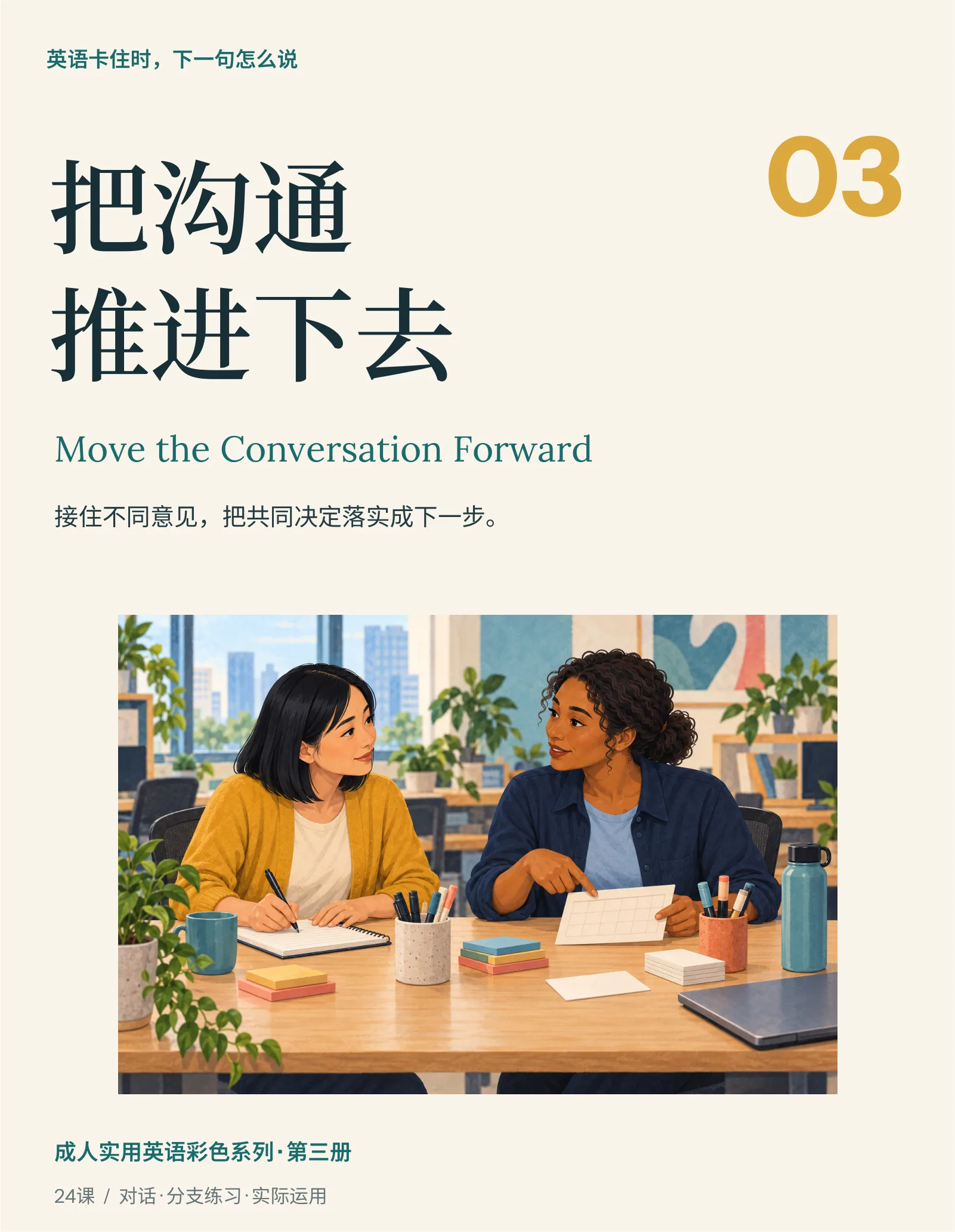
Cover of Move the Conversation Forward: Take on different views, and turn shared decisions into next steps.

Tap the cover to enlarge

Practical English for Adults · Book 3

Move the Conversation Forward

《把沟通推进下去》

Take on different views, and turn shared decisions into next steps.

Book 3 picks up from "after things are clear": helping both sides say what they need, proposing options that can be compared, and turning what has actually been agreed into action.

Moving a conversation forward does not mean persuading the other person every time. They can say no, and you can explain your limits; when conditions are not yet met, you can also check the information first and discuss it again later. The exercises ask you to tell which sentences are proposals, which are acceptances and which only promise a reply later, and to write verbal agreements up as short follow-up messages.

  • 24lessons
  • 6units
  • 96key expressions
  • 166pages (PDF)

Who it is for

  • Adults who are native Chinese speakers with basic English, but tend to get stuck when discussing, negotiating and following up
  • Readers who can explain situations and want to go further: make suggestions, respond to disagreement, and turn discussion into action
  • This book can be used on its own; the front of the book has a two-page quick reference for communication repair, reviewing how to clarify and how to explain things clearly

The characters in the books, Lin and Maya, are fictional adult colleagues, and the situations are mostly training, work arrangements, community events and everyday errands. The English is common American usage; you are not expected to imitate any particular accent. The three books build on one another step by step in communication skills and do not correspond to CEFR or other language levels.

What you will practice

  • Start and organize a discussion: open a discussion with a clear goal, join in at the right moment, invite others to share their views, and bring a discussion that has drifted back on track
  • Propose and compare options: make practical suggestions, offer another option, weigh benefits and costs, and explain conditions and possible outcomes
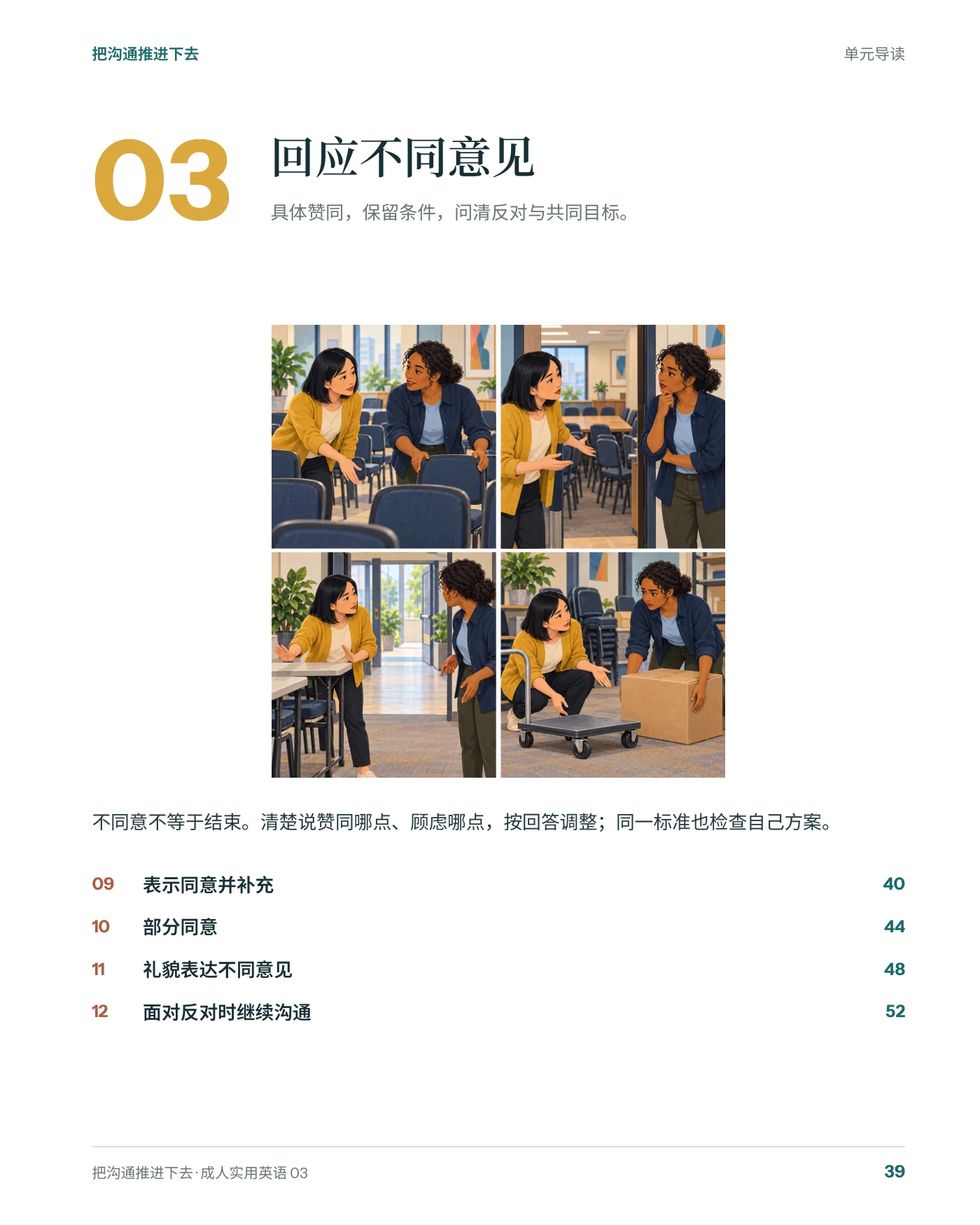
  • Respond to different views: agree and add a point, agree in part, disagree politely, and keep communicating when someone objects
  • Negotiate arrangements and limits: negotiate time, priorities, tasks and resources, say no while offering an alternative, and find a solution both sides can accept
  • Handle conversations that are hard to move forward: when the other person gives no clear answer, when you need to remind and follow up, when a misunderstanding causes tension, when you can't agree for now
  • Reach an outcome you can act on: summarize options and decisions, confirm who does what by when, and write a short follow-up after agreeing verbally

Real pages from the book

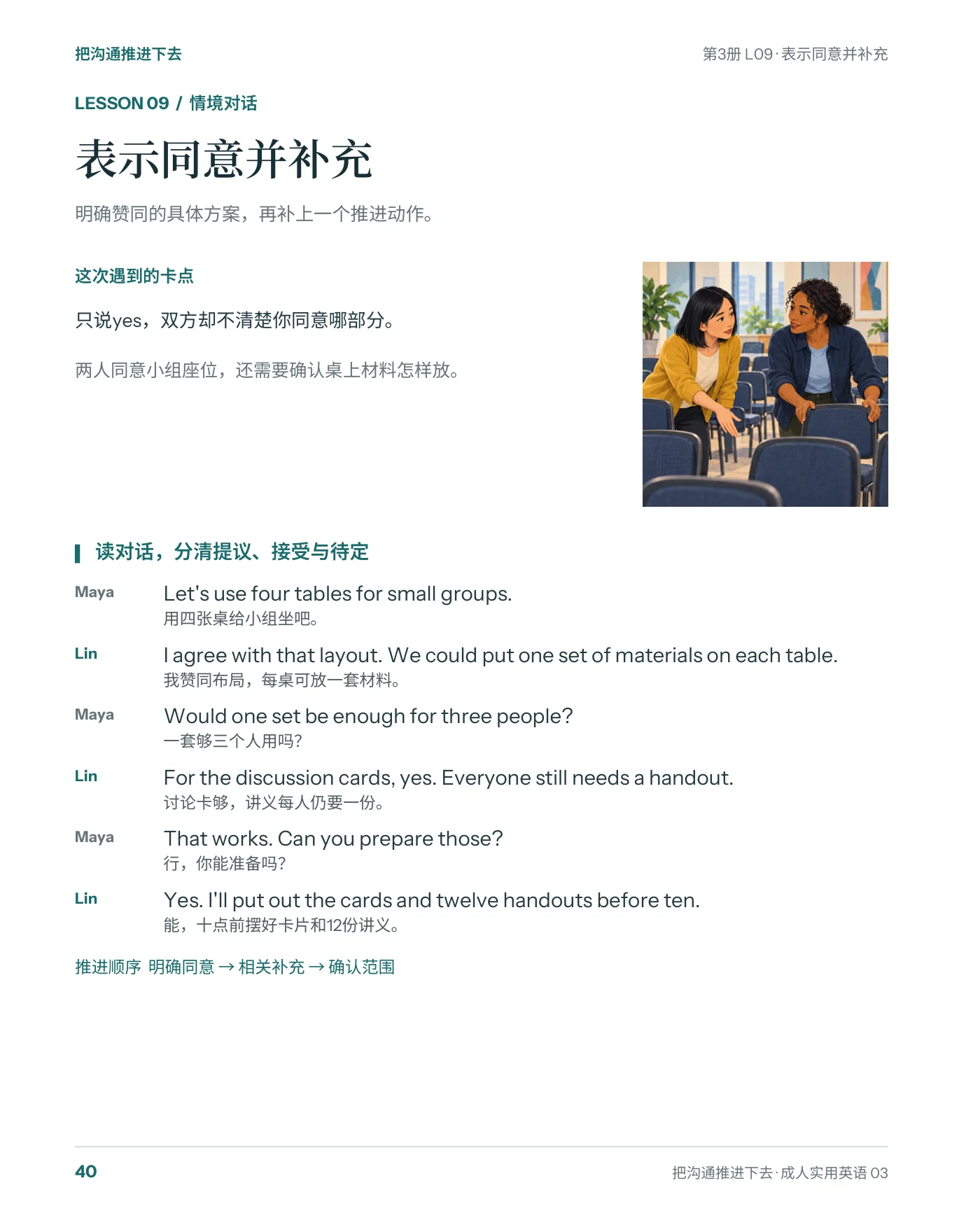
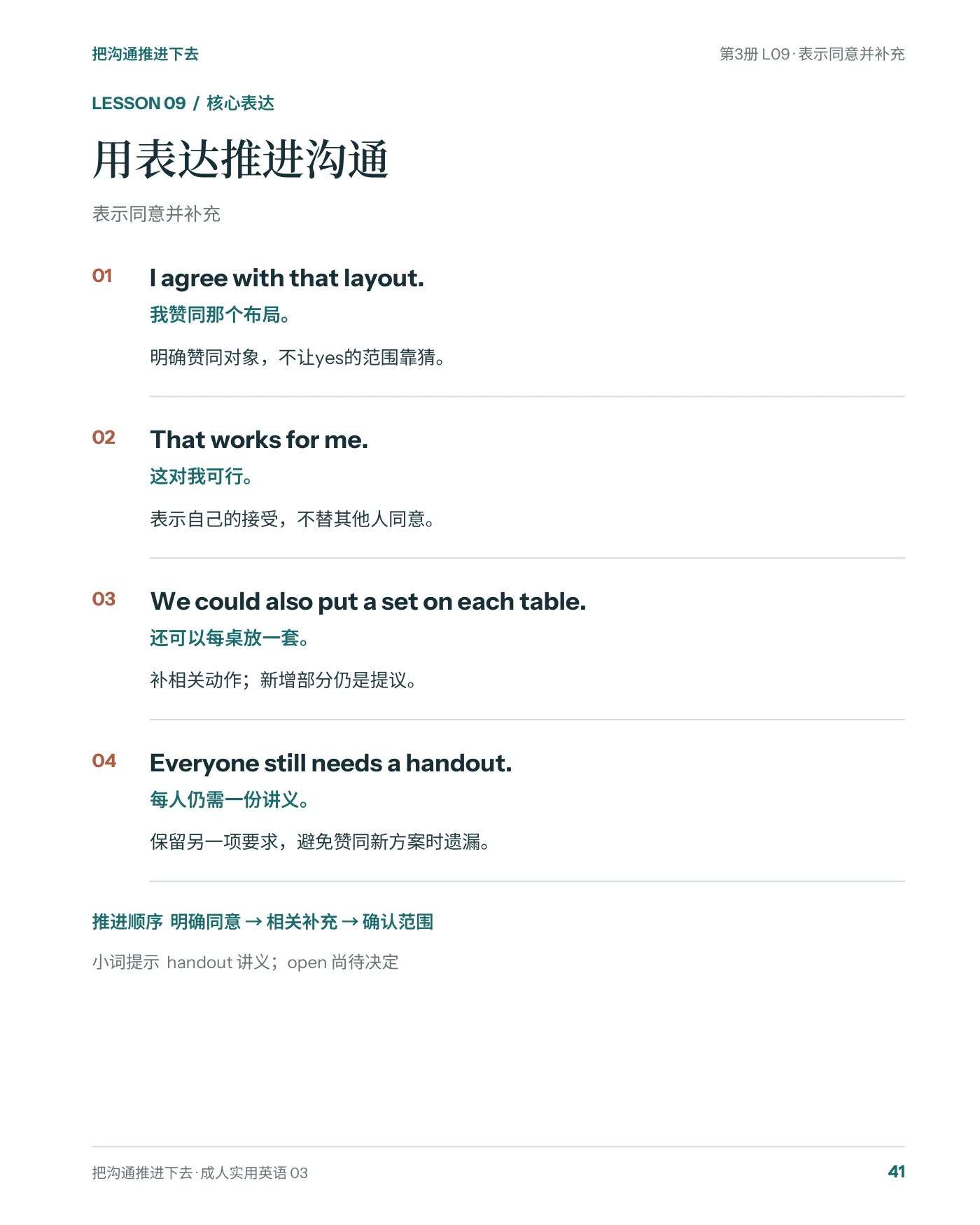
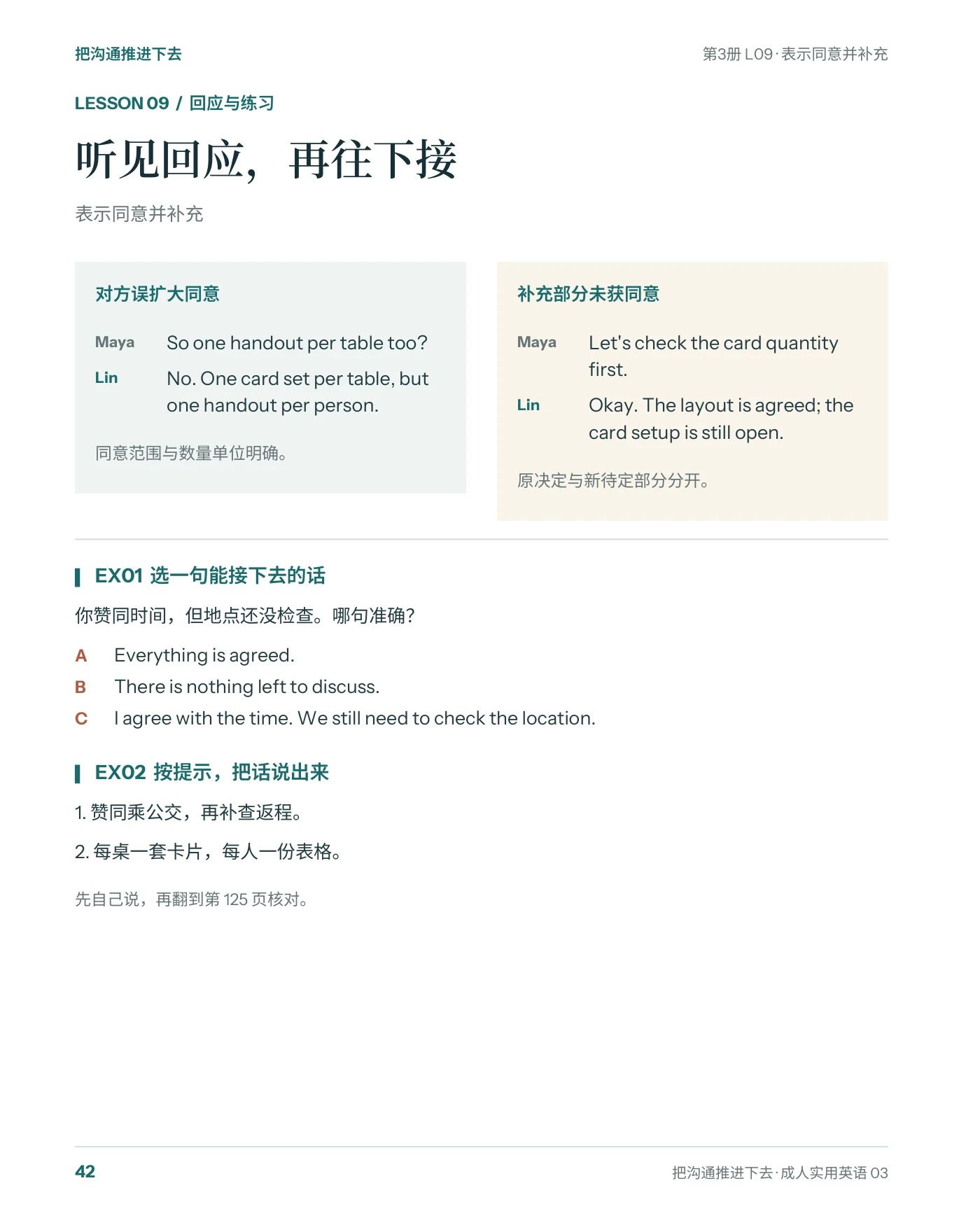
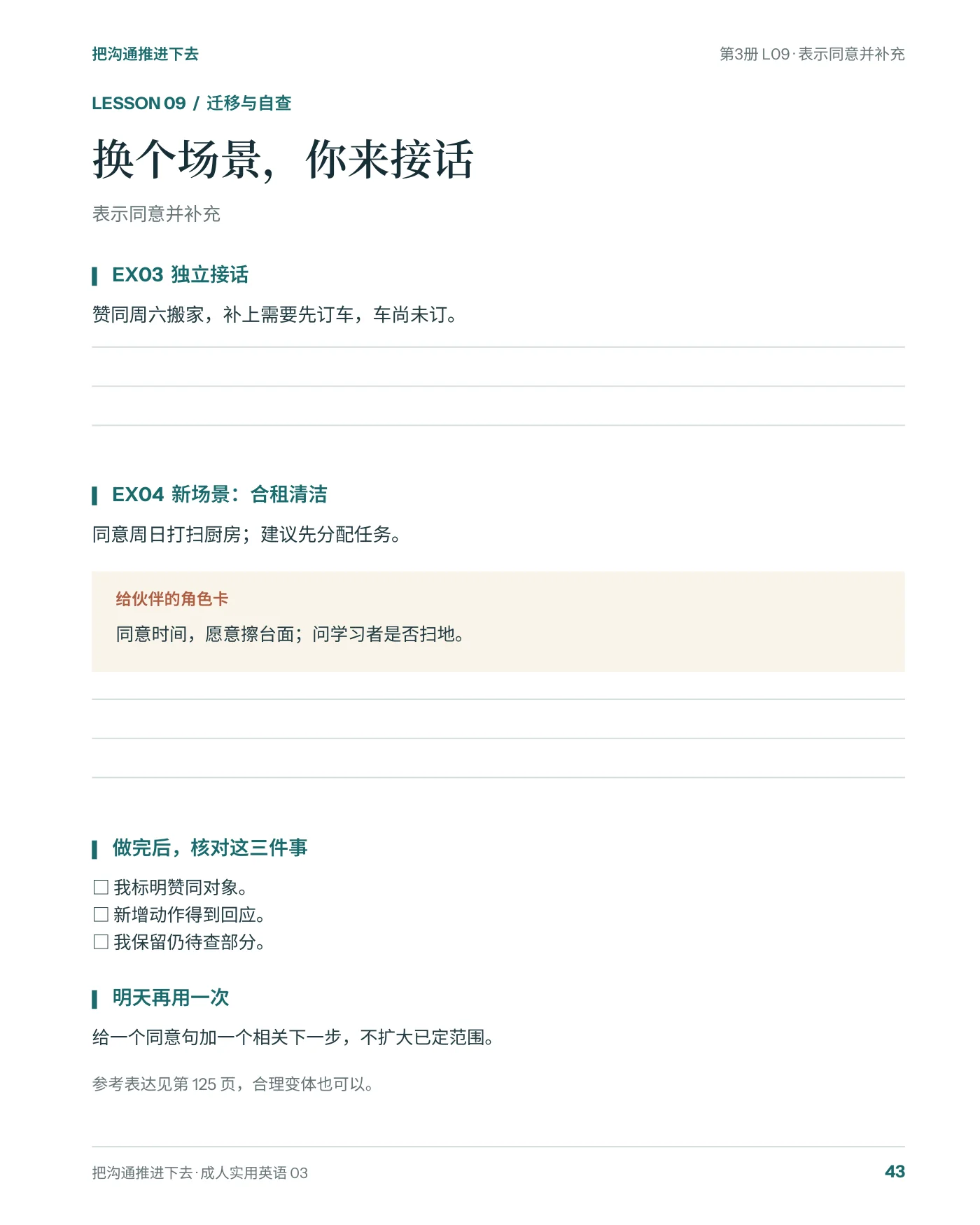
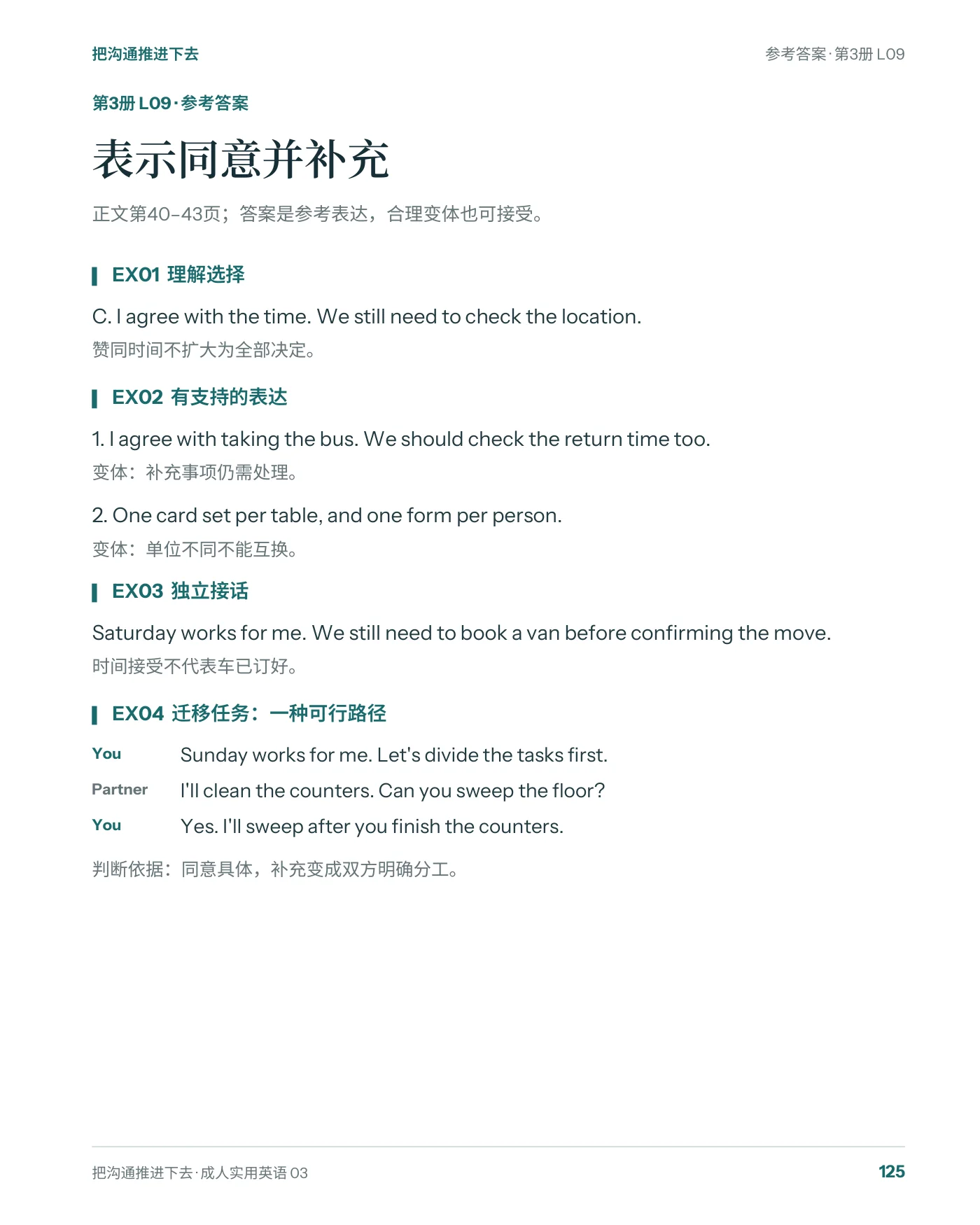
Actual pages from the full PDF: a unit opener, all four pages of “Agreeing and adding a point”, and its answer key. Tap to enlarge.

These pages are also in the free sample PDF.

The four pages of every lesson

  1. Situational dialogue

    A continuous dialogue written for the lesson, in English and Chinese side by side. Read it through once and mark where you get stuck.

  2. Core expressions

    Four ways to say it, with explanations in Chinese and notes on when to use each.

  3. Response branches and practice

    How to carry on when the other person responds in different ways; exercises ranging from multiple choice to prompted speaking practice.

  4. Using it in a new situation

    Say it yourself in a different situation, with a self-check list.

The 4 core expressions of L09 “Agreeing and adding a point”

  • I agree with that layout.我赞同那个布局。
  • That works for me.这对我可行。
  • We could also put a set on each table.还可以每桌放一套。
  • Everyone still needs a handout.每人仍需一份讲义。

Contents

24 lessons in 6 units. Tap a unit to see its lessons.

Unit 1Starting and organizing a discussion
  1. Starting a discussion with a clear goal
  2. Joining in at the right moment
  3. Inviting others to share their views
  4. Bringing the discussion back on track
Unit 2Proposing and comparing options
  1. Making a practical suggestion
  2. Suggesting another option
  3. Weighing the pros and cons
  4. Explaining conditions and possible outcomes
Unit 3Responding to different views
  1. Agreeing and adding a pointIn sample
  2. Agreeing in part
  3. Disagreeing politely
  4. Staying engaged when someone objects
Unit 4Negotiating arrangements and limits
  1. Negotiating time and priorities
  2. Negotiating tasks and resources
  3. Saying no and offering an alternative
  4. Finding a solution that works for both sides
Unit 5Handling stalled conversations
  1. When you don't get a clear answer
  2. Sending reminders and following up
  3. When a misunderstanding causes tension
  4. When you can't agree yet
Unit 6Reaching an outcome you can act on
  1. Summarizing options and decisions
  2. Confirming who does what by when
  3. Putting a verbal agreement in writing
  4. Integrated challenge: From problem to action

Also: front matter (starting task with answer check; quick reference for communication repair), unit reviews, Integrated task 1: Arranging a venue for an event; Integrated task 2: Dividing tasks and following up, and at the back the full answer key and expression index.

Version and file

Version
v1.0
Format
PDF (complete reading edition), 8×10-inch pages, full color, fonts embedded
Pages
166
File size
5.1 MB
File name
把沟通推进下去-成人实用英语第三册-v1.0.pdf
SHA-256
a20ba0d2b7daaa2df1203fdc134720467bddf6a4ccd4e7f2b47ab30acca4eb8b

What you receive

  • One PDF of the version above. Your order records the exact version and checksum delivered.
  • A download link on the confirmation page and by email (the file is not attached).
  • Not included: printed book, print-ready files, audio, video, online course, web exercises, app or editable source files

How this book was made

The text, exercises, Chinese explanations and color illustrations in these books were generated with AI tools and revised through several rounds of AI review; the layout was done by software; the characters and situations are fictional. The books have not yet had a final review by an independent human language editor, and have not yet been tested with target readers.

The other two books